
Inside a display case and arranged on wooden square shelves, the collection of pharmaceutical and laboratory objects from the pharmacy is exhibited. Starting from the top left and moving to the right and downward, we can distinguish four general categories of exhibits: containers and receptacles, cosmetics and pharmaceutical products, purchase books and operating licenses, and pharmaceutical tools.
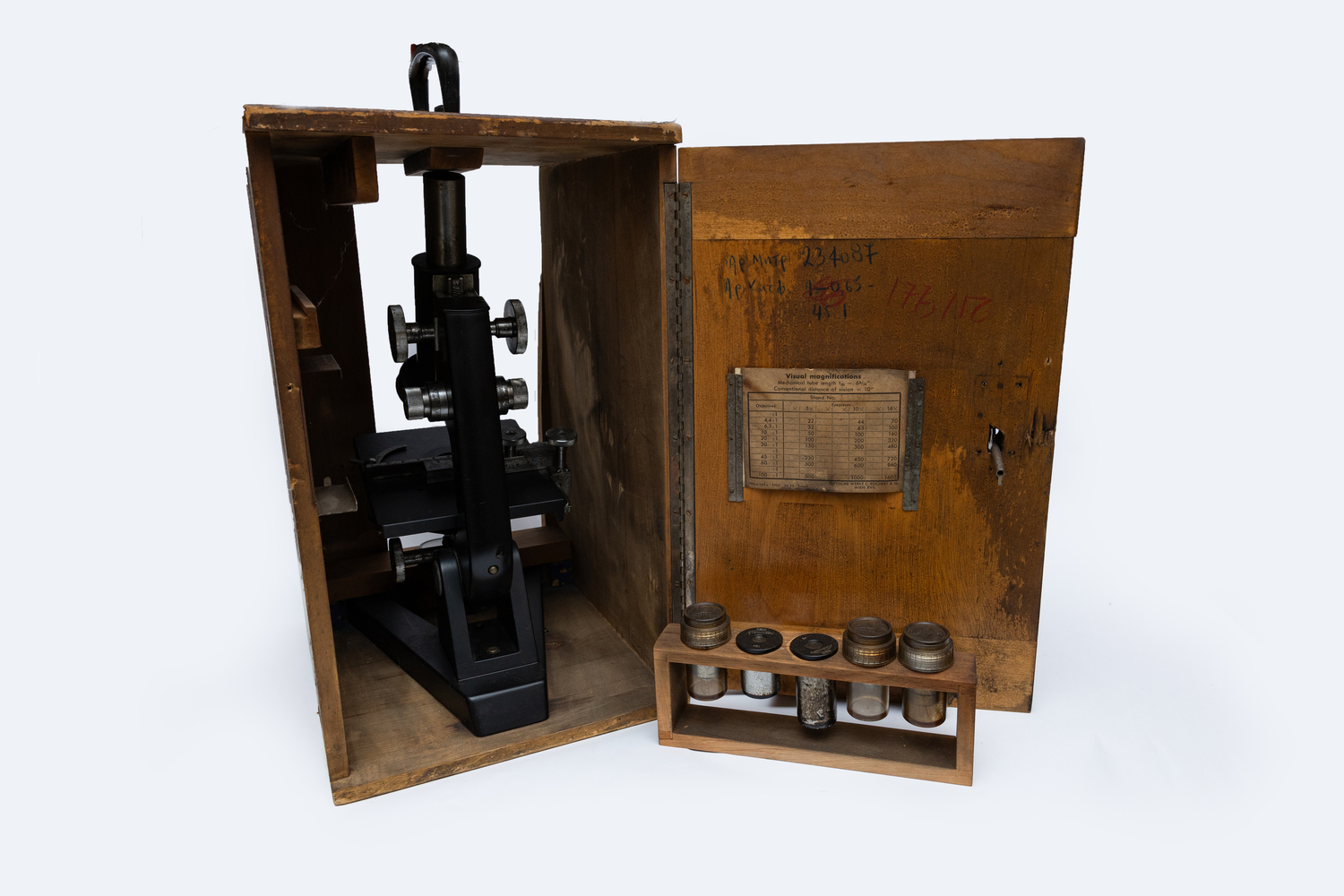
An old microscope made of black metal, integrated into a wooden box with a small door. On the inner surface of the door, there are shaped compartments for small glass jars, a paper with information in English and handwritten notes in pencil.
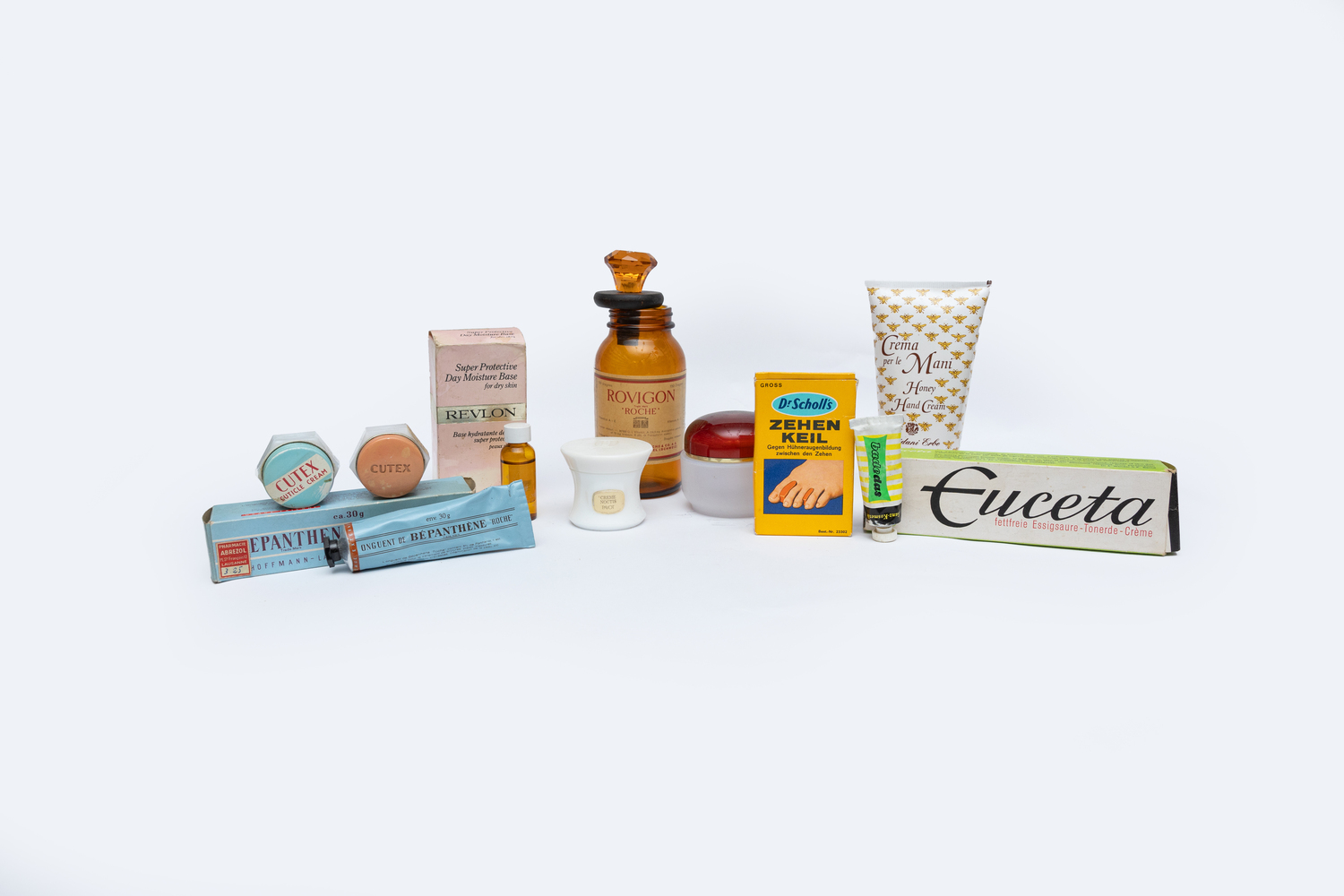
Old packaging of cosmetics and parapharmaceutical products.
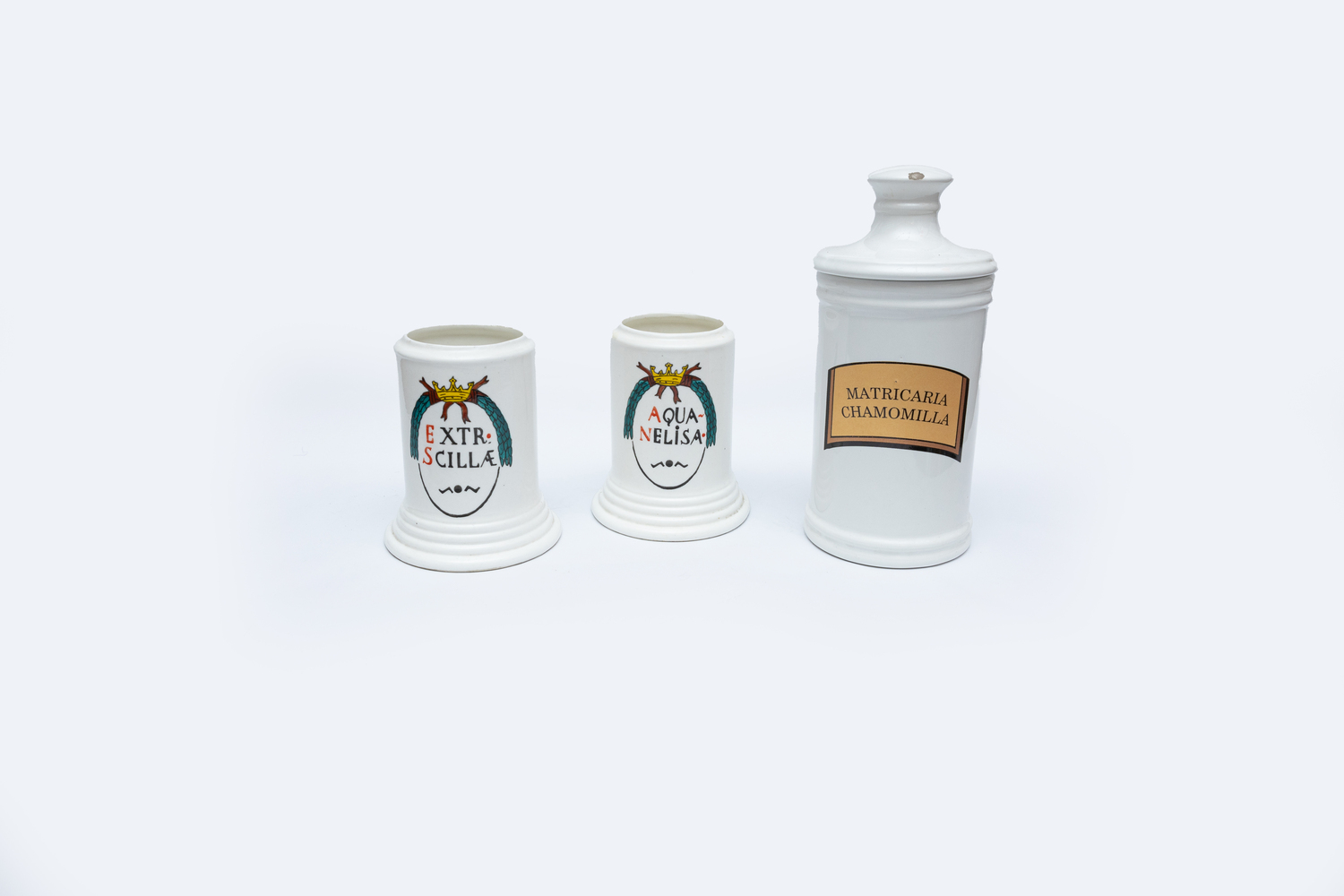
Three old porcelain jars in white color, with painted labels in Latin characters.
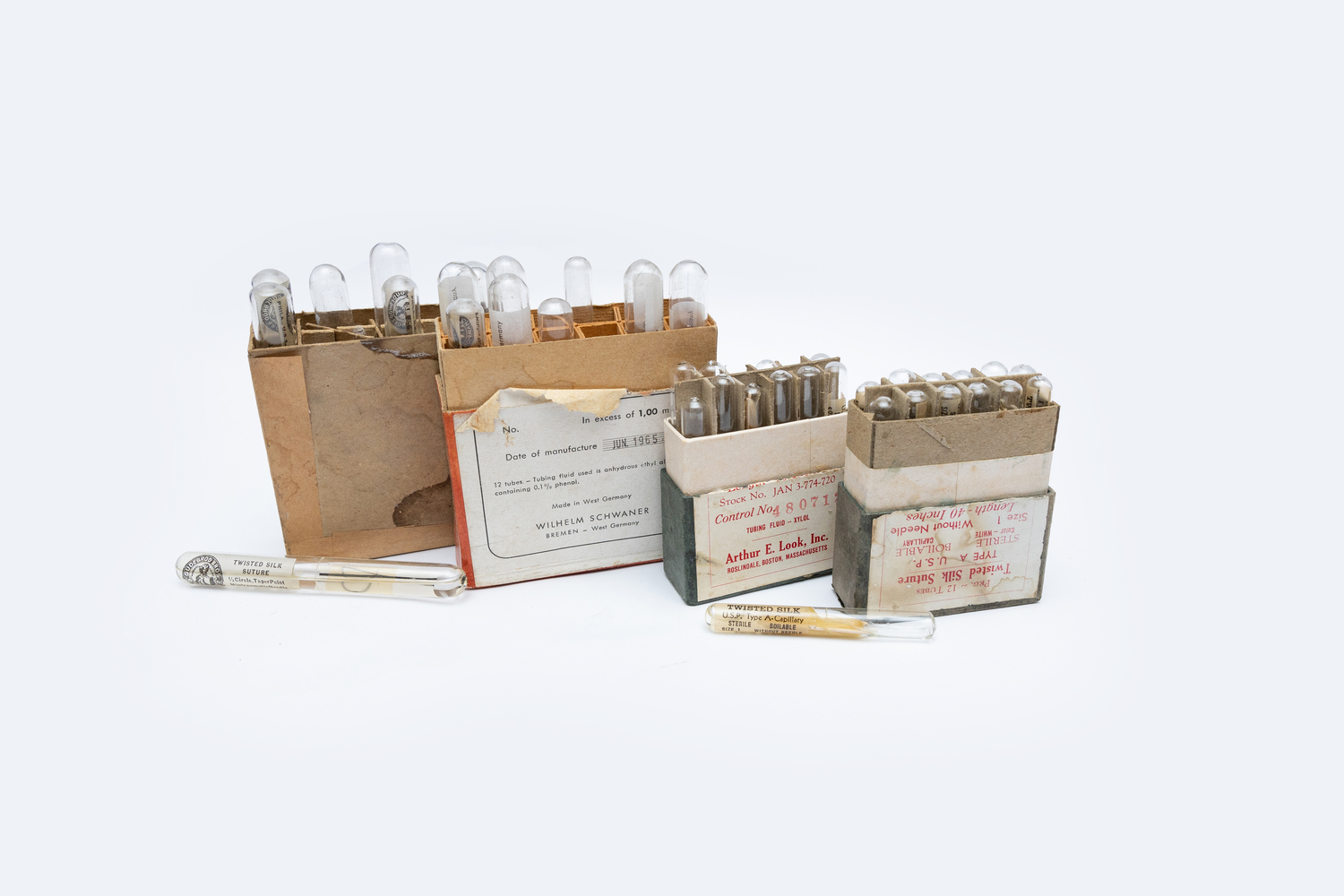
Old boxes with glass vials of laboratory materials. The boxes show visible wear due to time, with worn-out labels that display information in English.
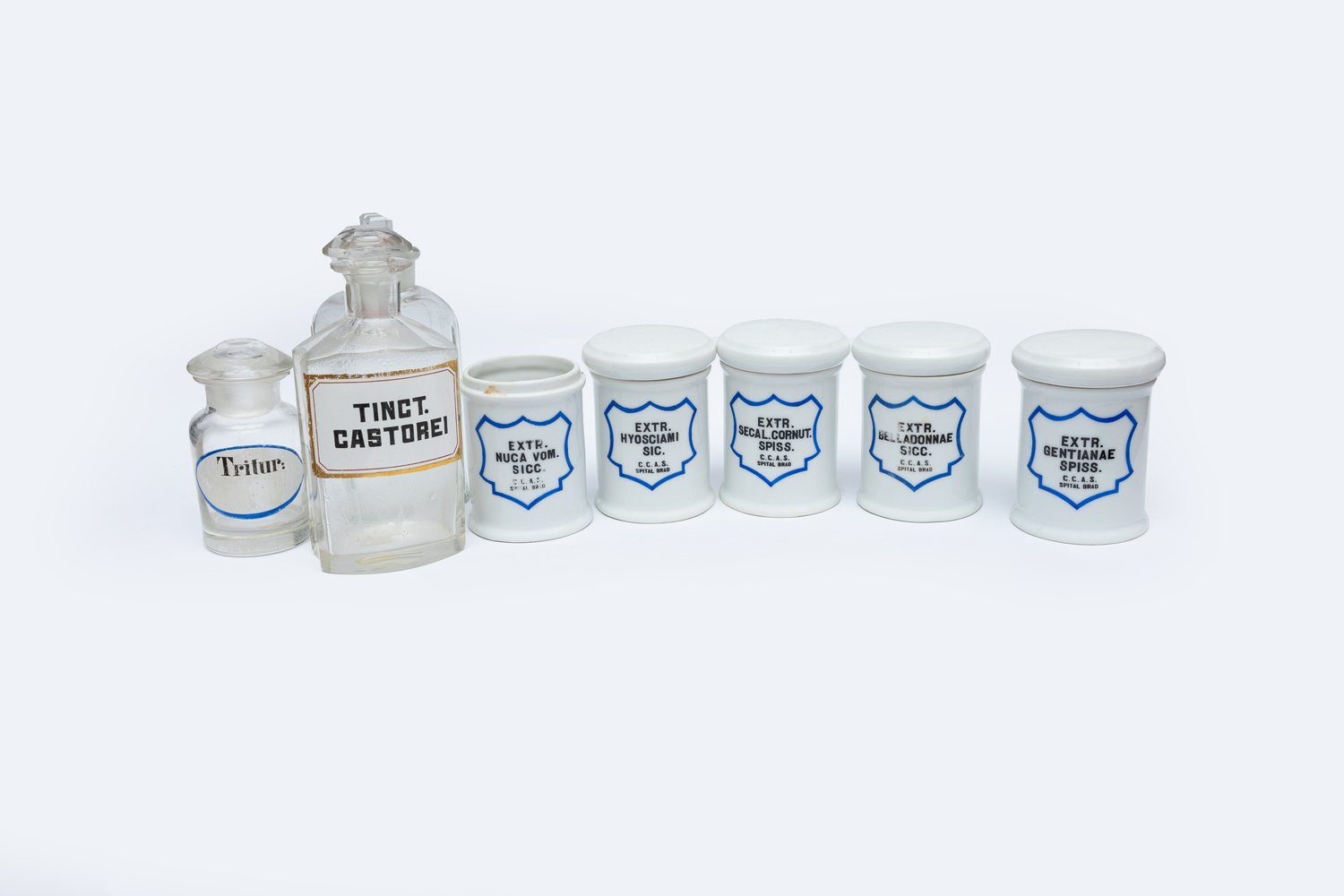
Old glass and porcelain jars for pharmaceutical substances.
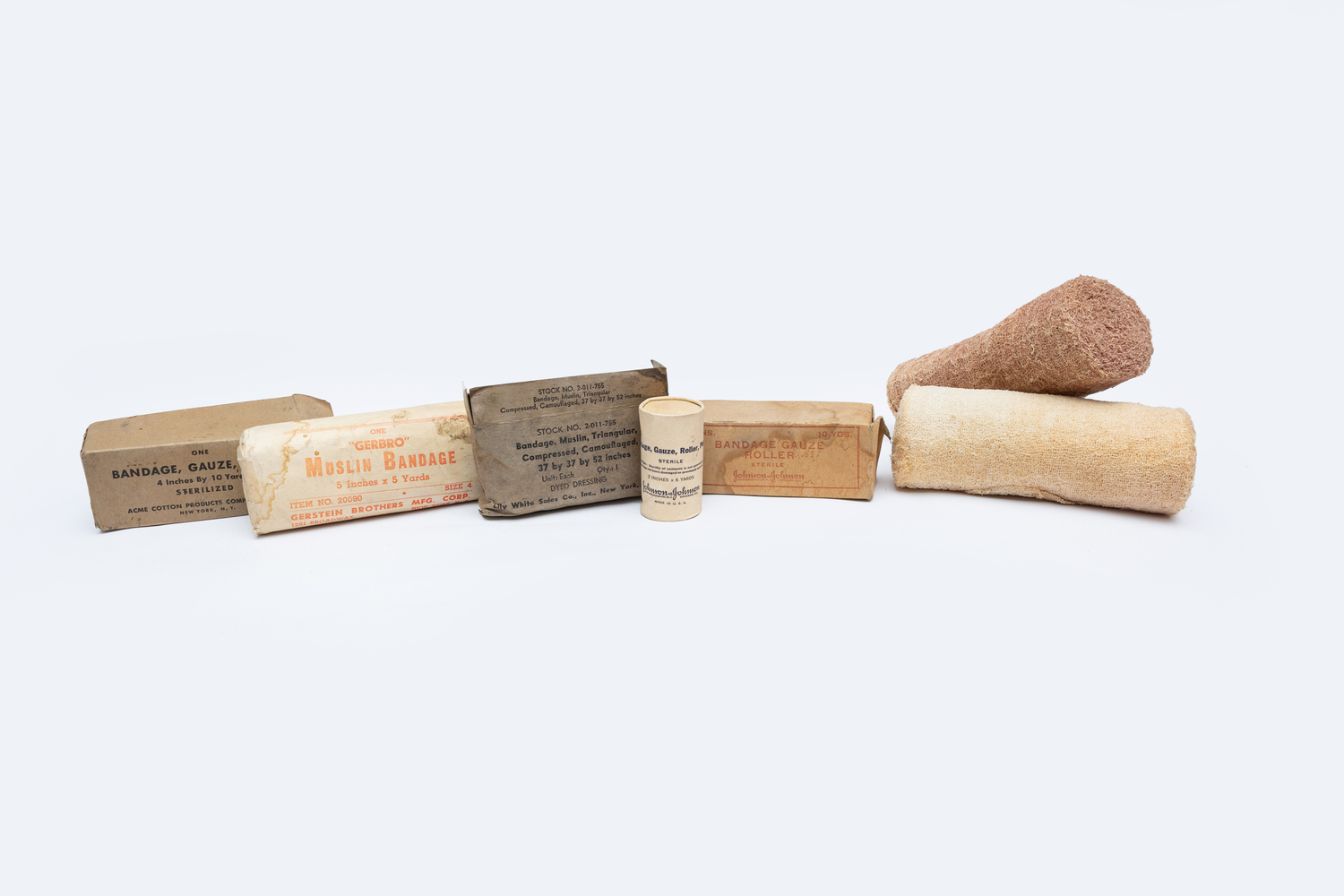
Old gauze with their original packaging.
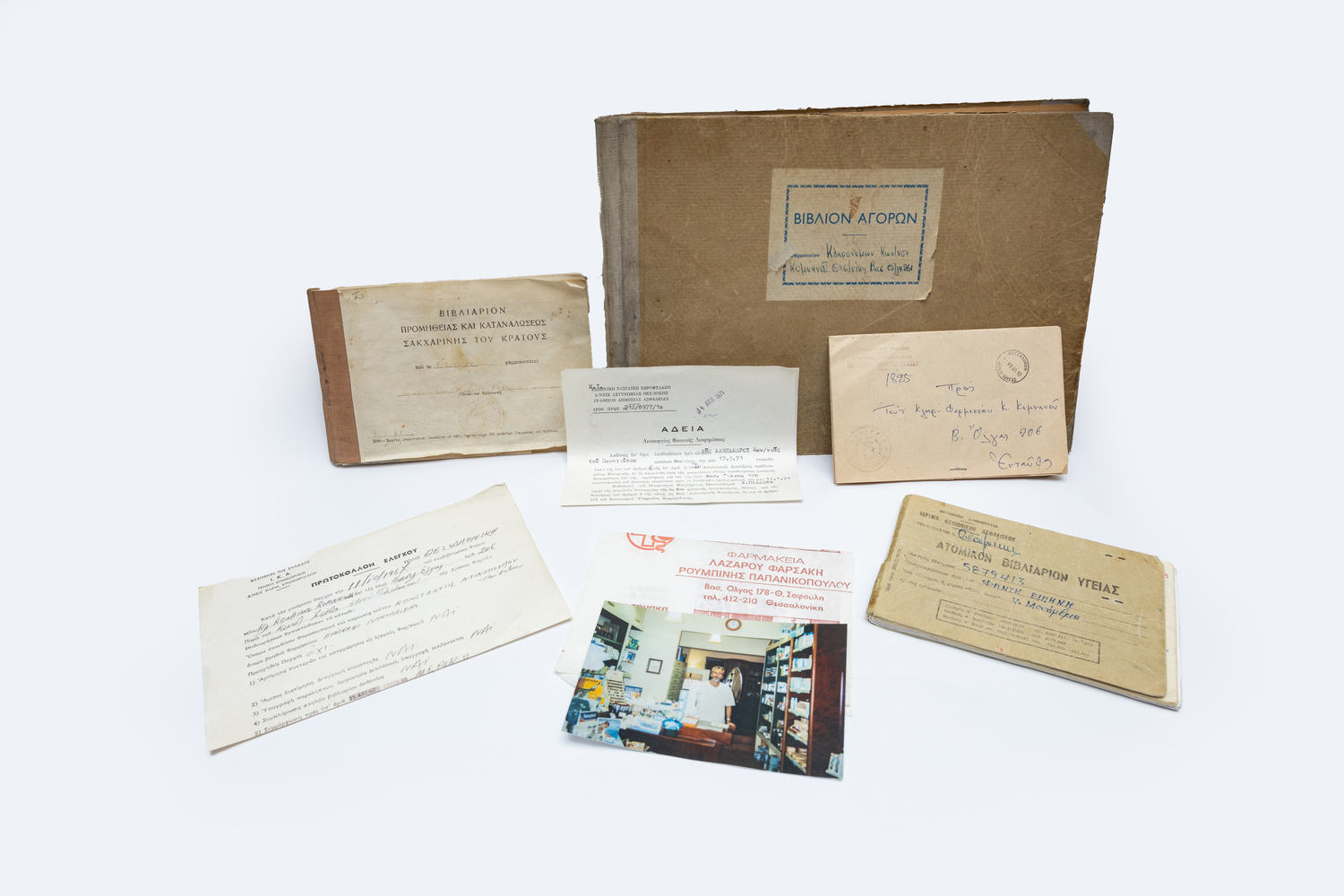
Collection of purchase books, operating licenses of the pharmacy and other documents. Notable items include a 1935 health record book and a 1980 color photograph of the pharmacy’s owner at the time inside the pharmacy.
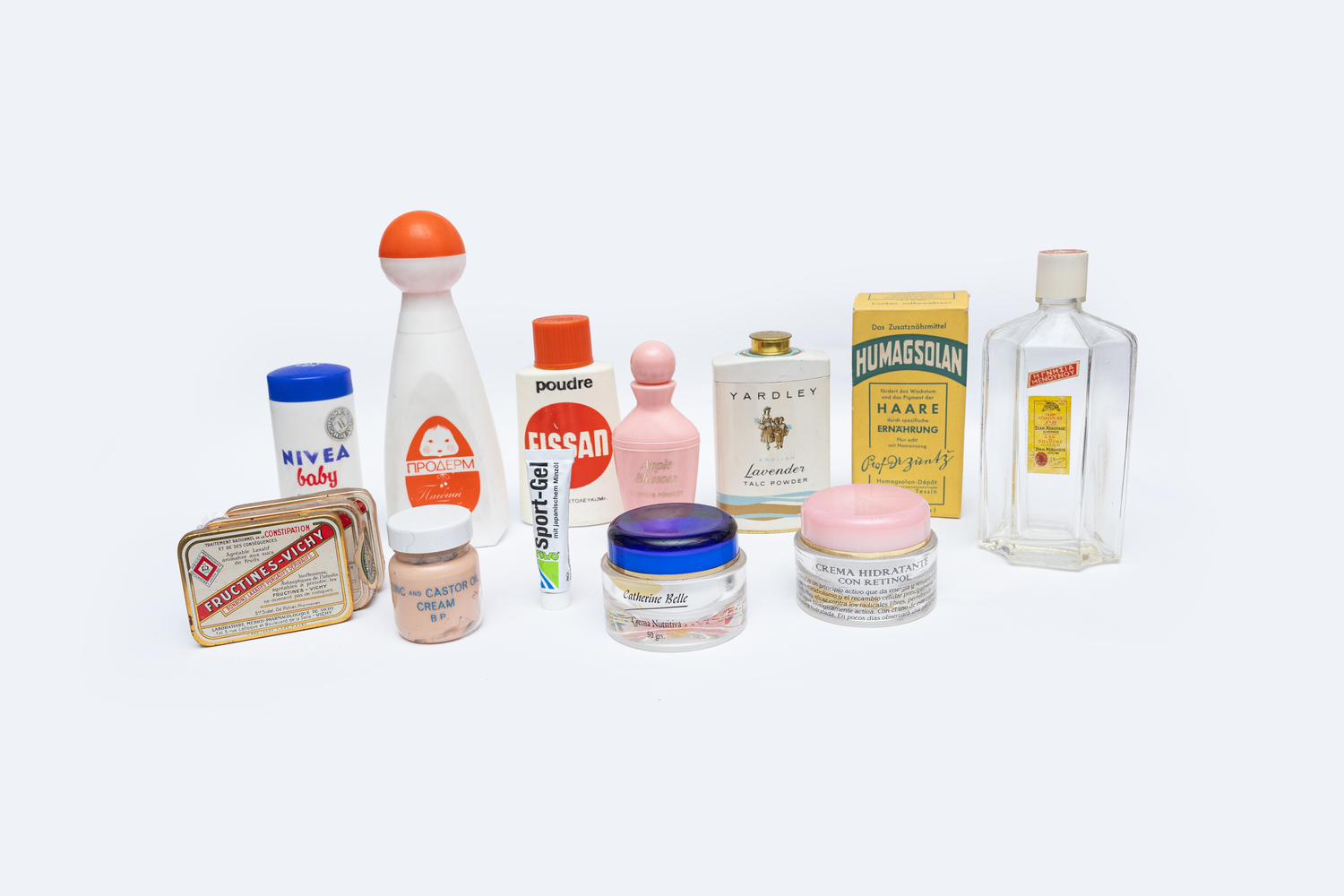
Old packaging of cosmetics and parapharmaceutical products. Well-known brands such as Proderm, Fissan, and Menounos cologne can be distinguished.
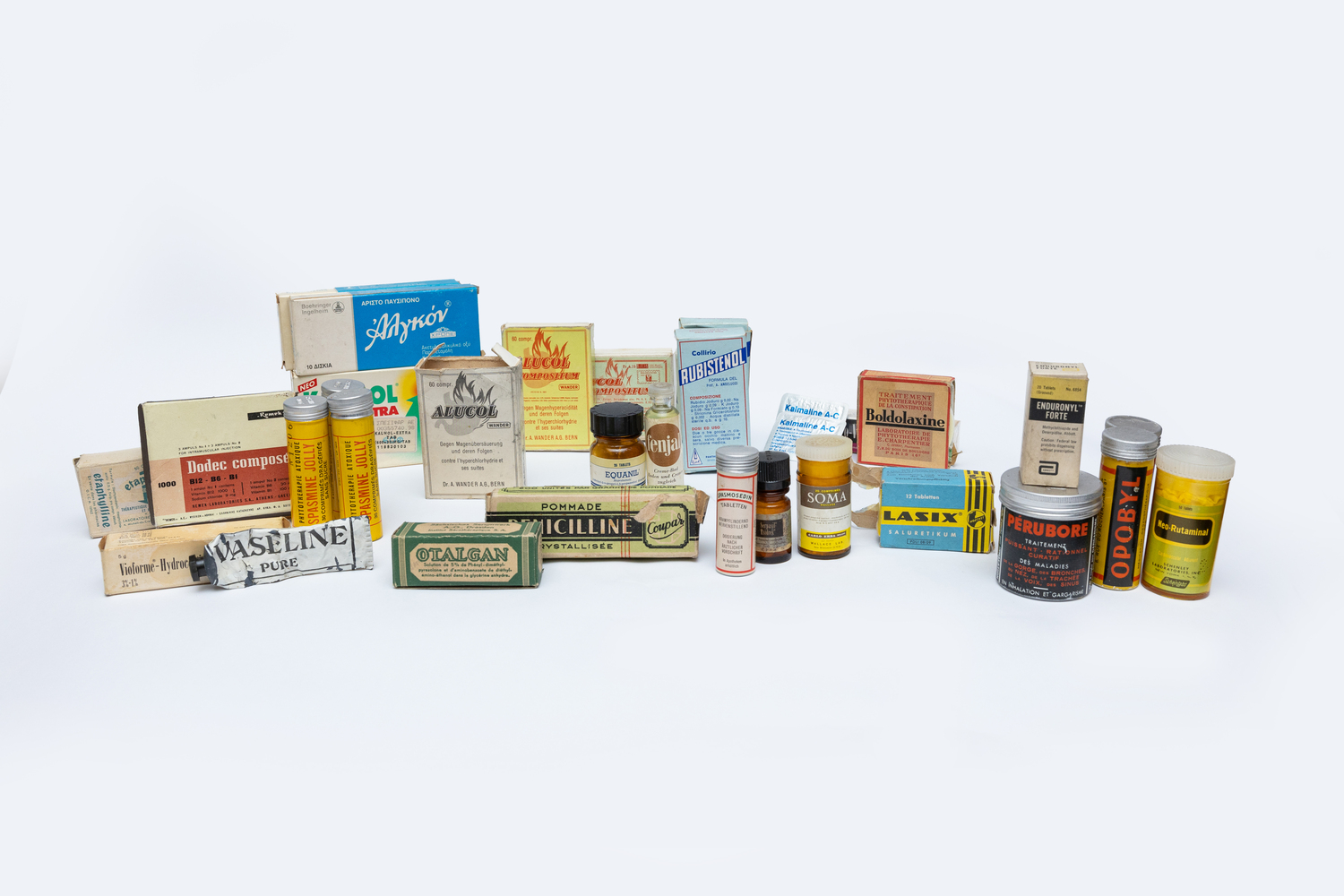
Collection of old pharmaceutical packages. Notable brands still known today include Vaseline, Algon, and Lasix.
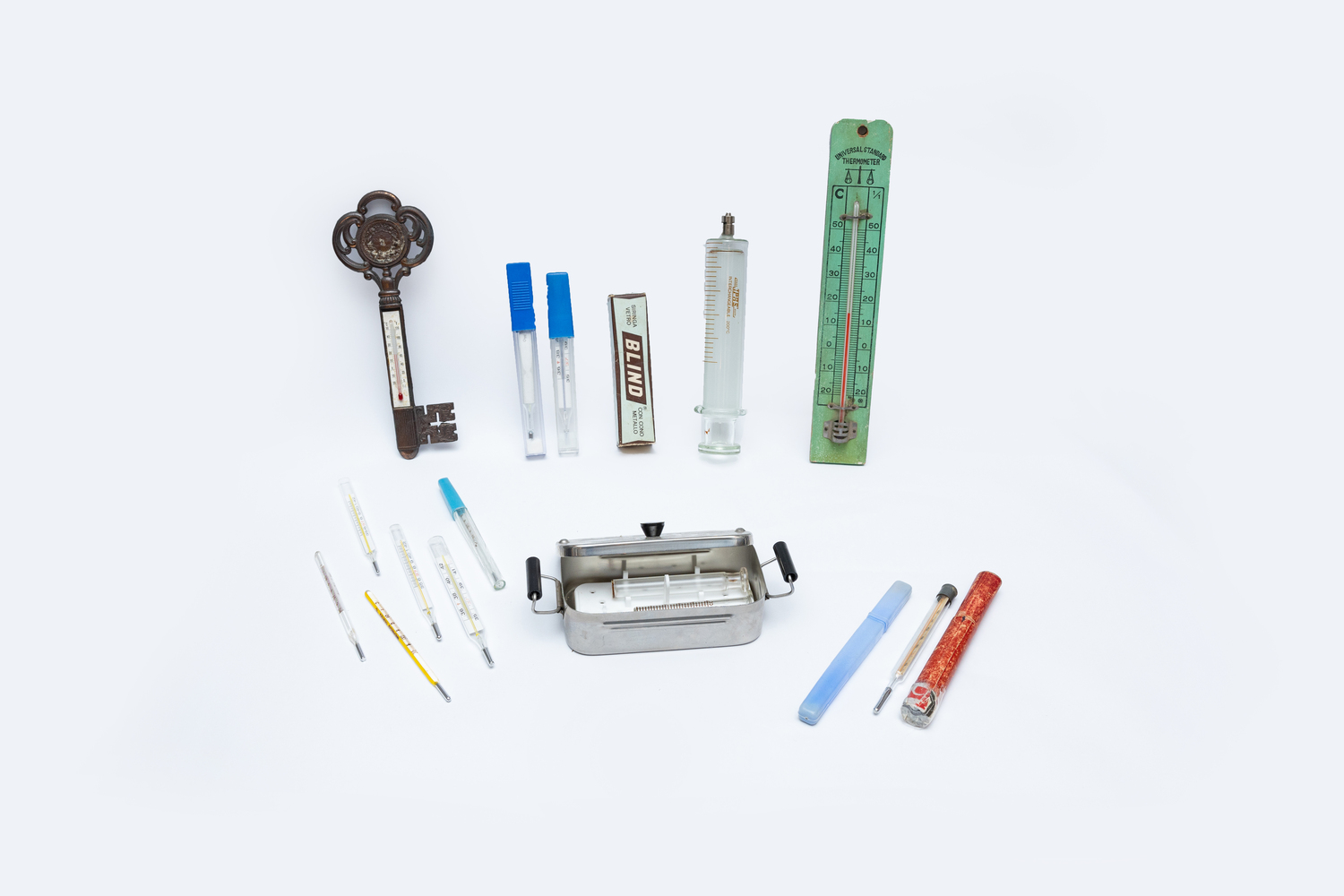
Collection of various old mercury thermometers. In the center, there is an old glass syringe inside its metal case.
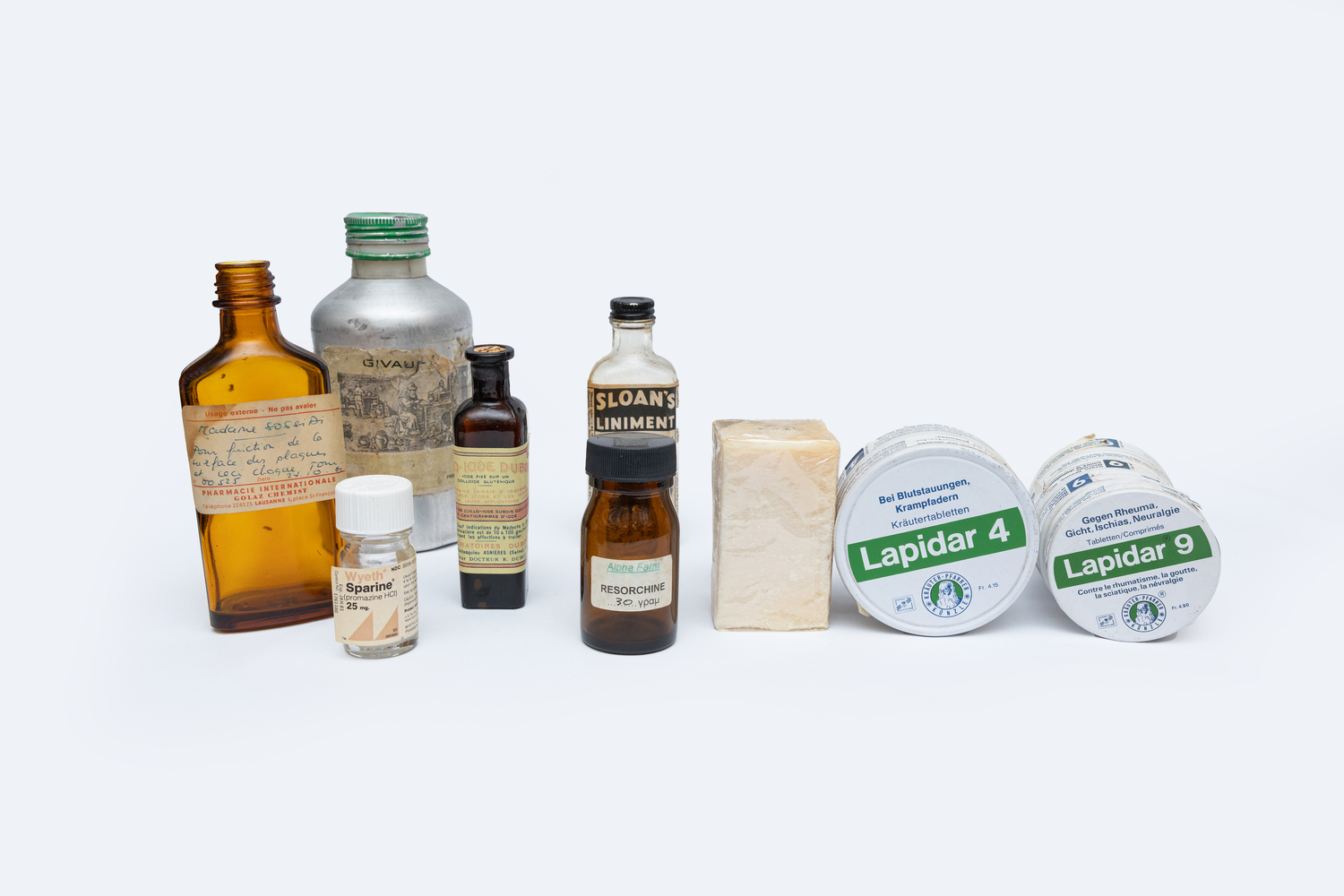
Collection of old pharmaceutical and parapharmaceutical products in glass bottles and plastic cream containers.
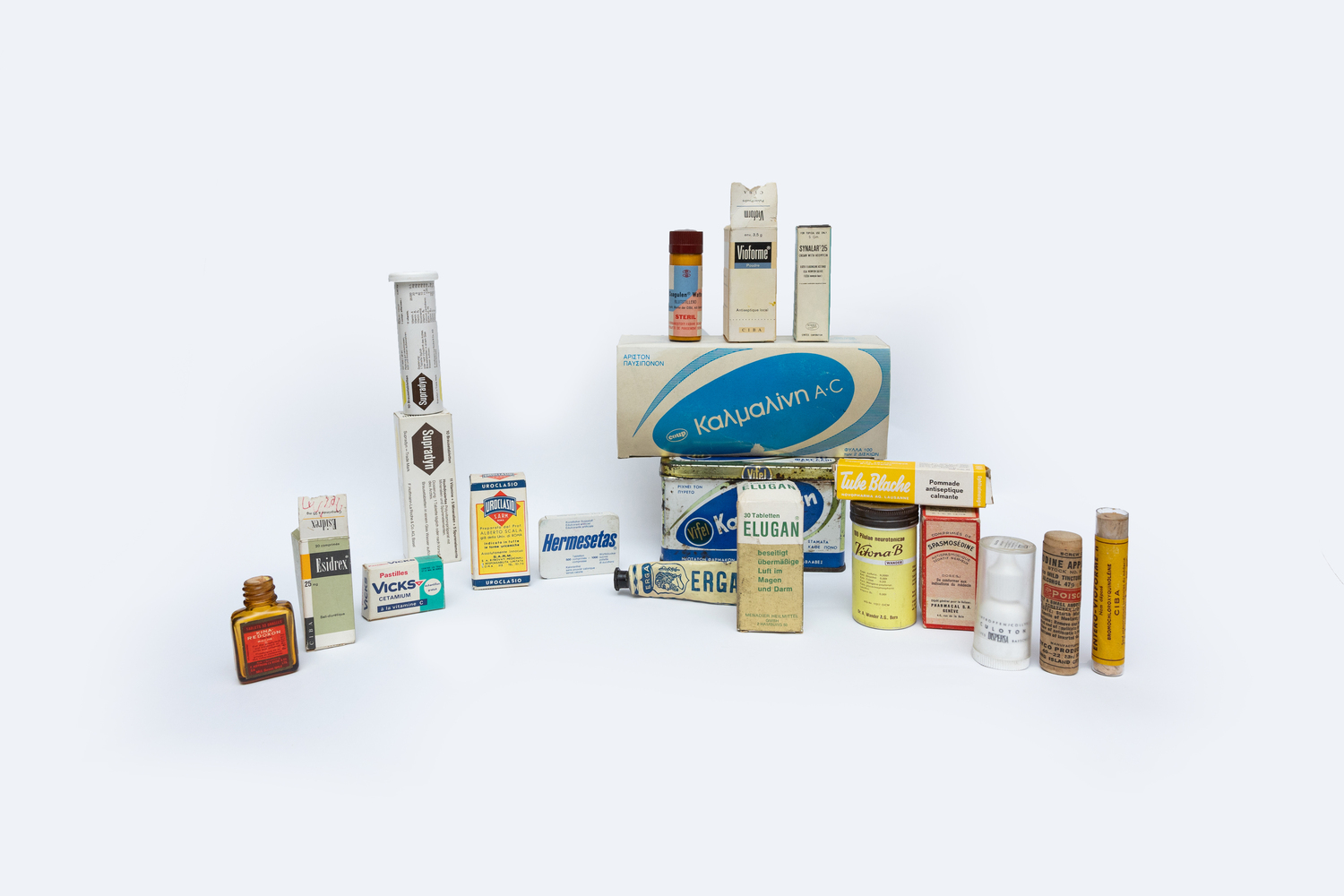
Collection of old pharmaceutical and parapharmaceutical packaging, including Vicks and Kalmaline.
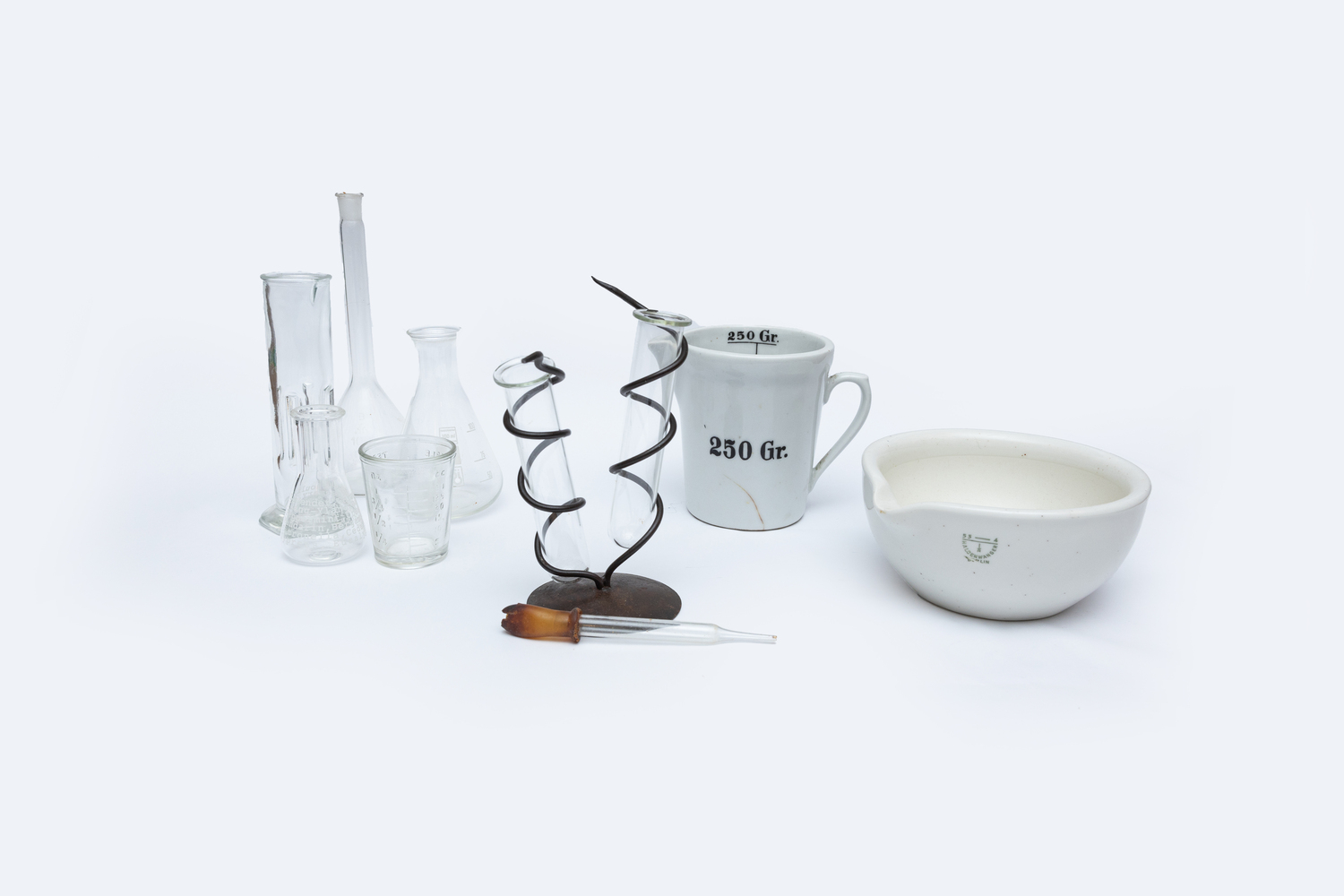
Containers, vessels, and laboratory equipment. At the center of the composition, laboratory tubes with a metallic spiral stand and a pipette stand out.
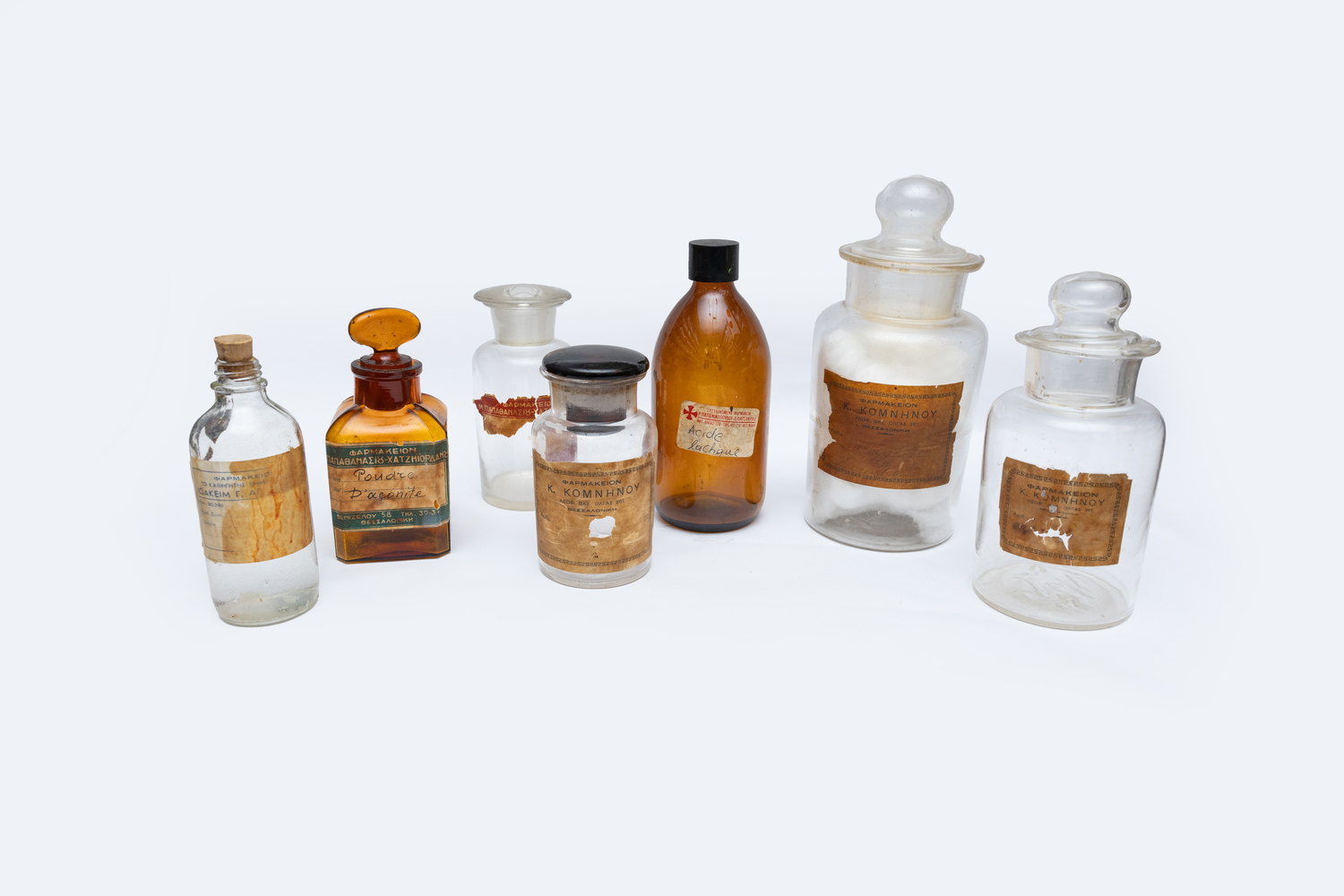
Old glass vials and medicine containers.
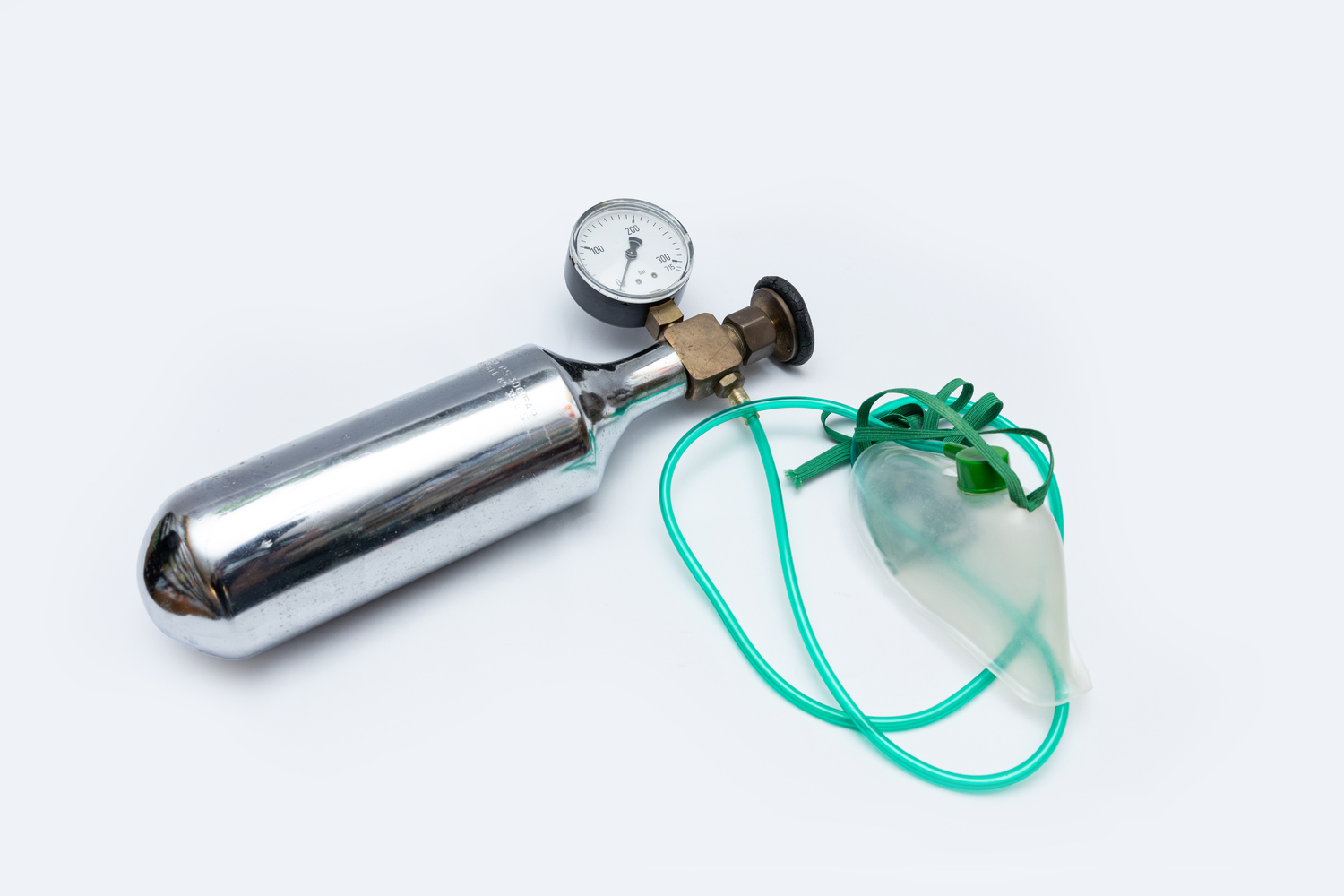
Old oxygen cylinder, donated by Nikolaidis Iraklis. It consists of a metal cylinder with a round gauge at its opening that measures the oxygen pressure and a plastic tube with a mask at the end, worn by the patient around the mouth and nose to inhale the oxygen contained in the cylinder.
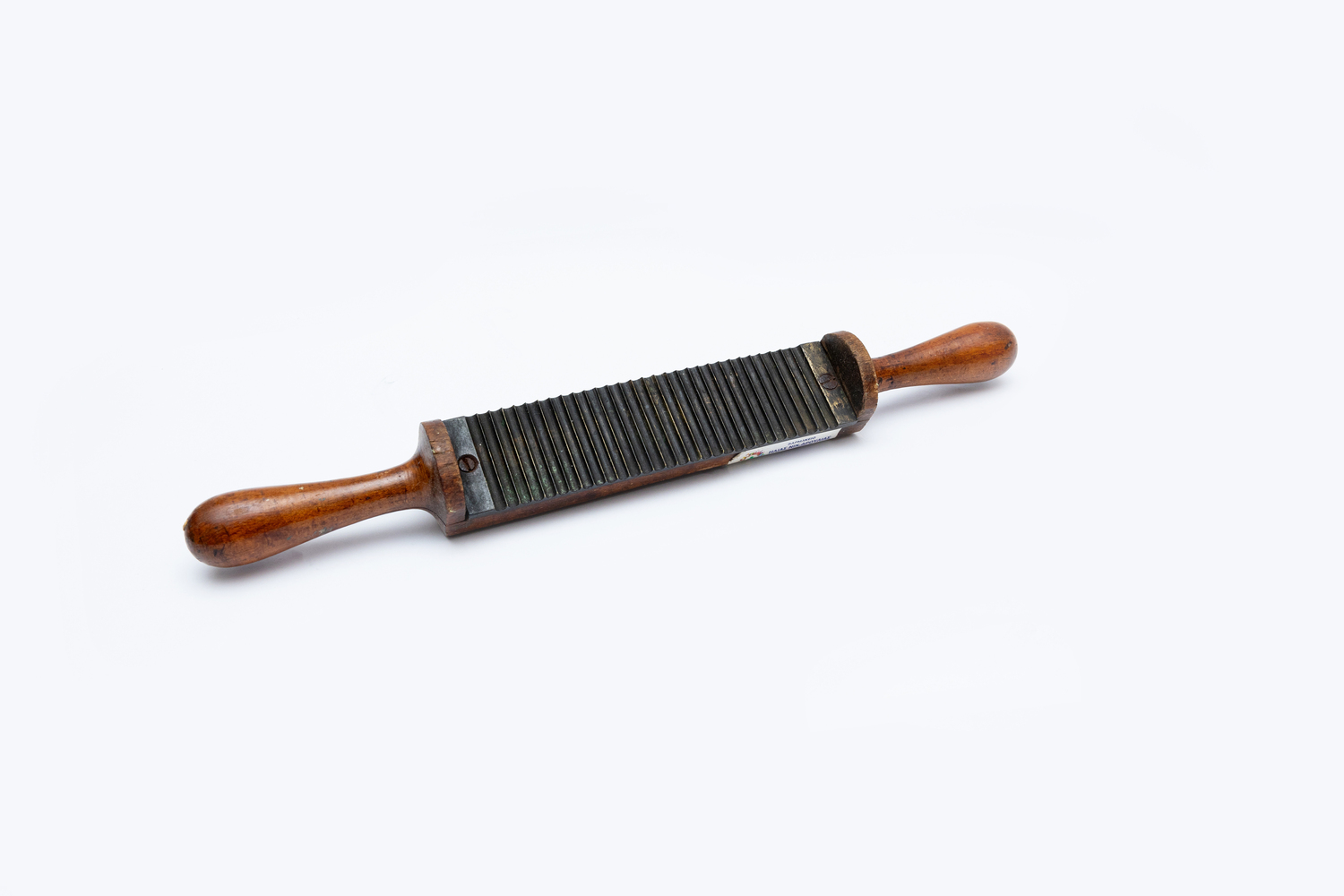
Wooden tool for grinding pharmaceutical substances. It has handles at both ends and a textured grinding surface in the center.
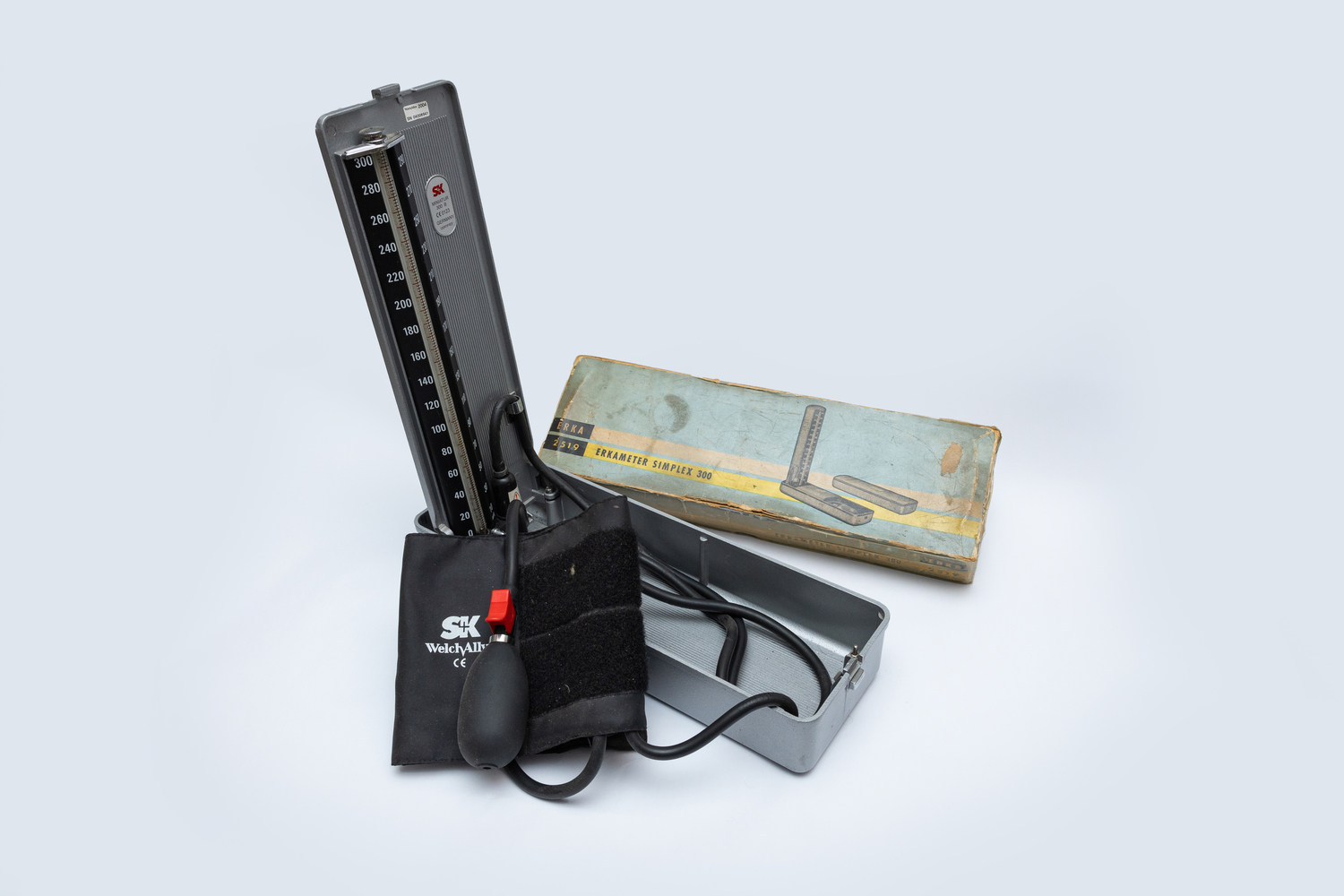
A sphygmomanometer embedded in a metal case. Next to it rests its cardboard packaging, worn by time, depicting how the sphygmomanometer opens and closes within the metal case.
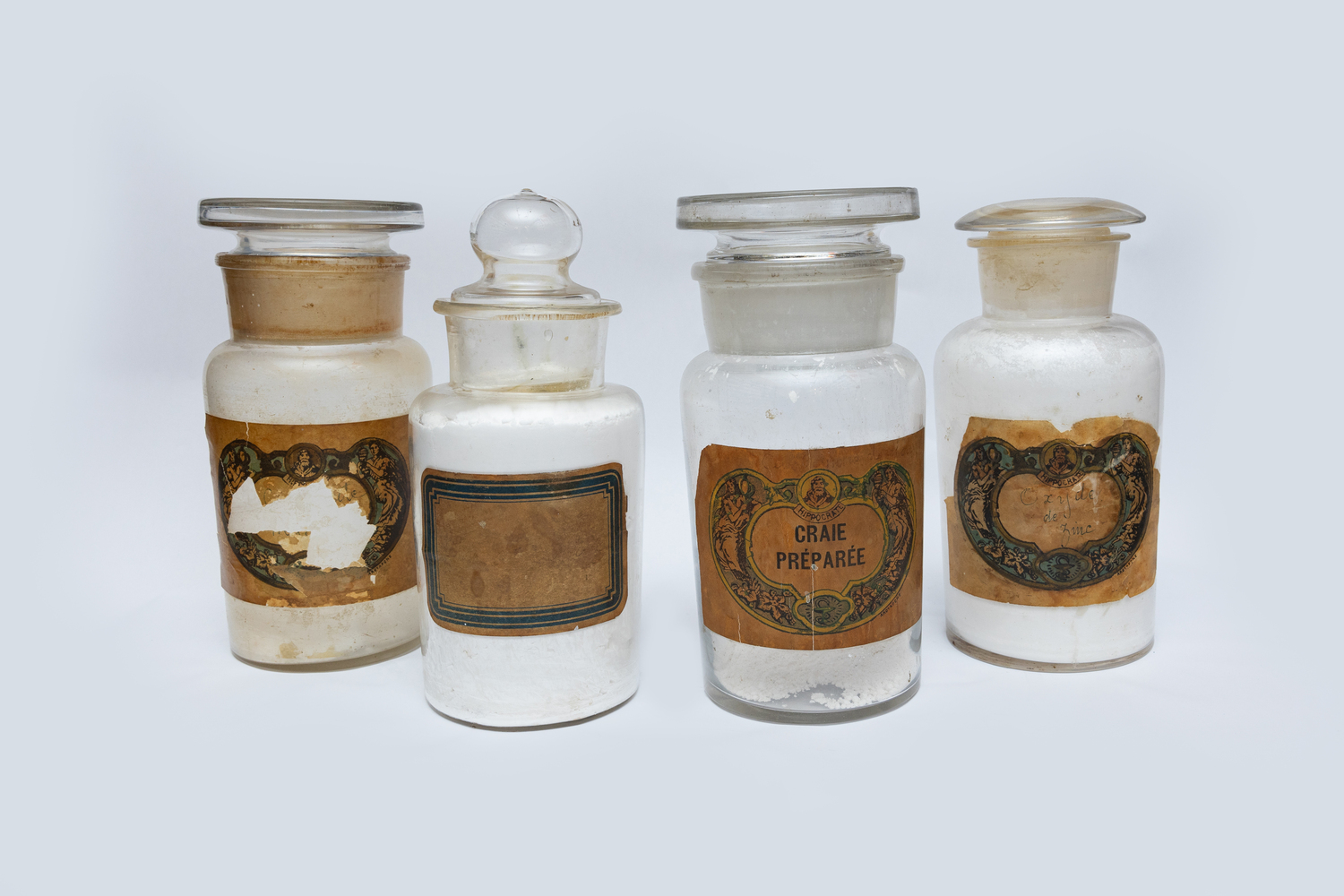
Transparent glass bottles with their old labels, which are yellowed and worn by time.
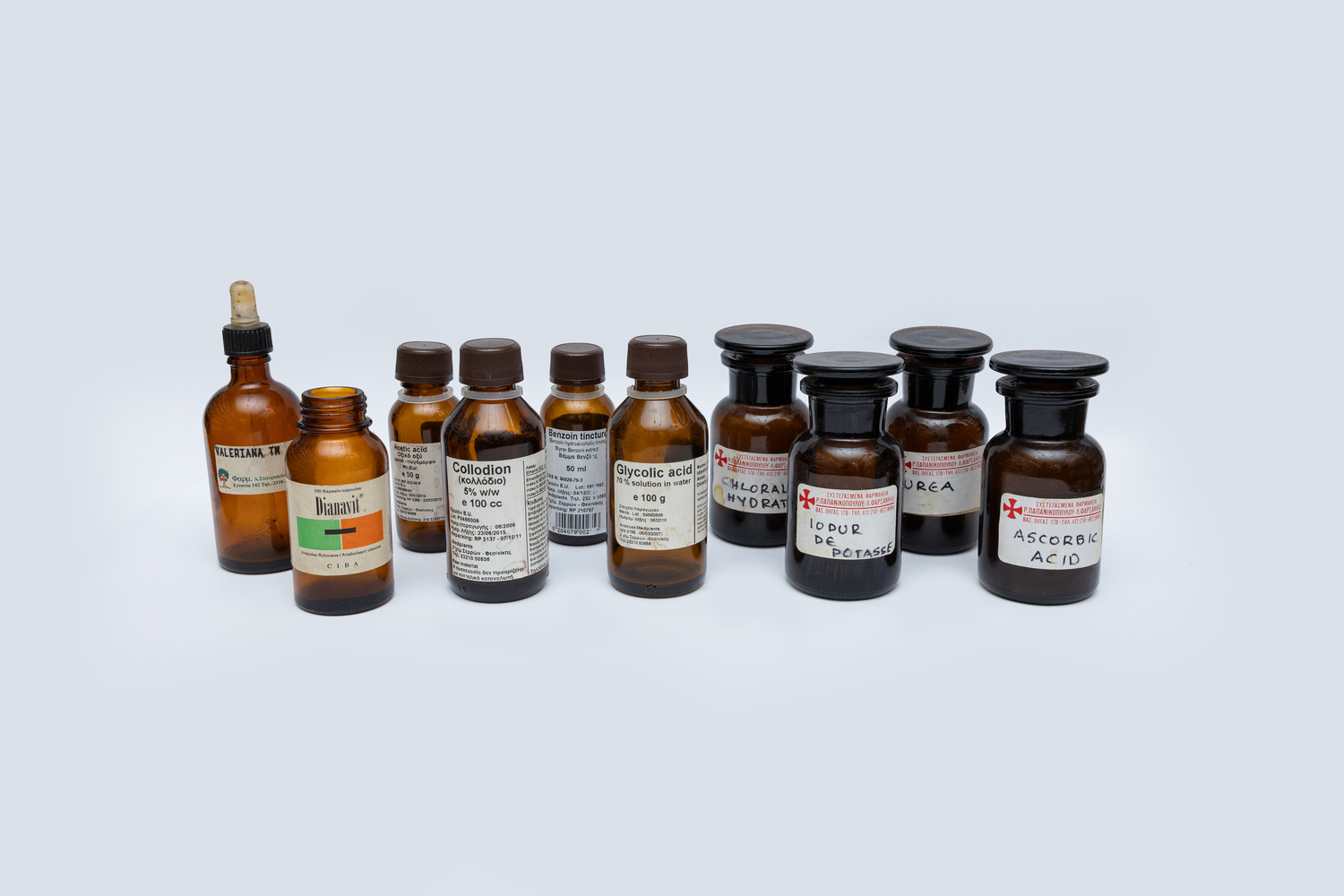
Old medicine bottles made of brown glass.
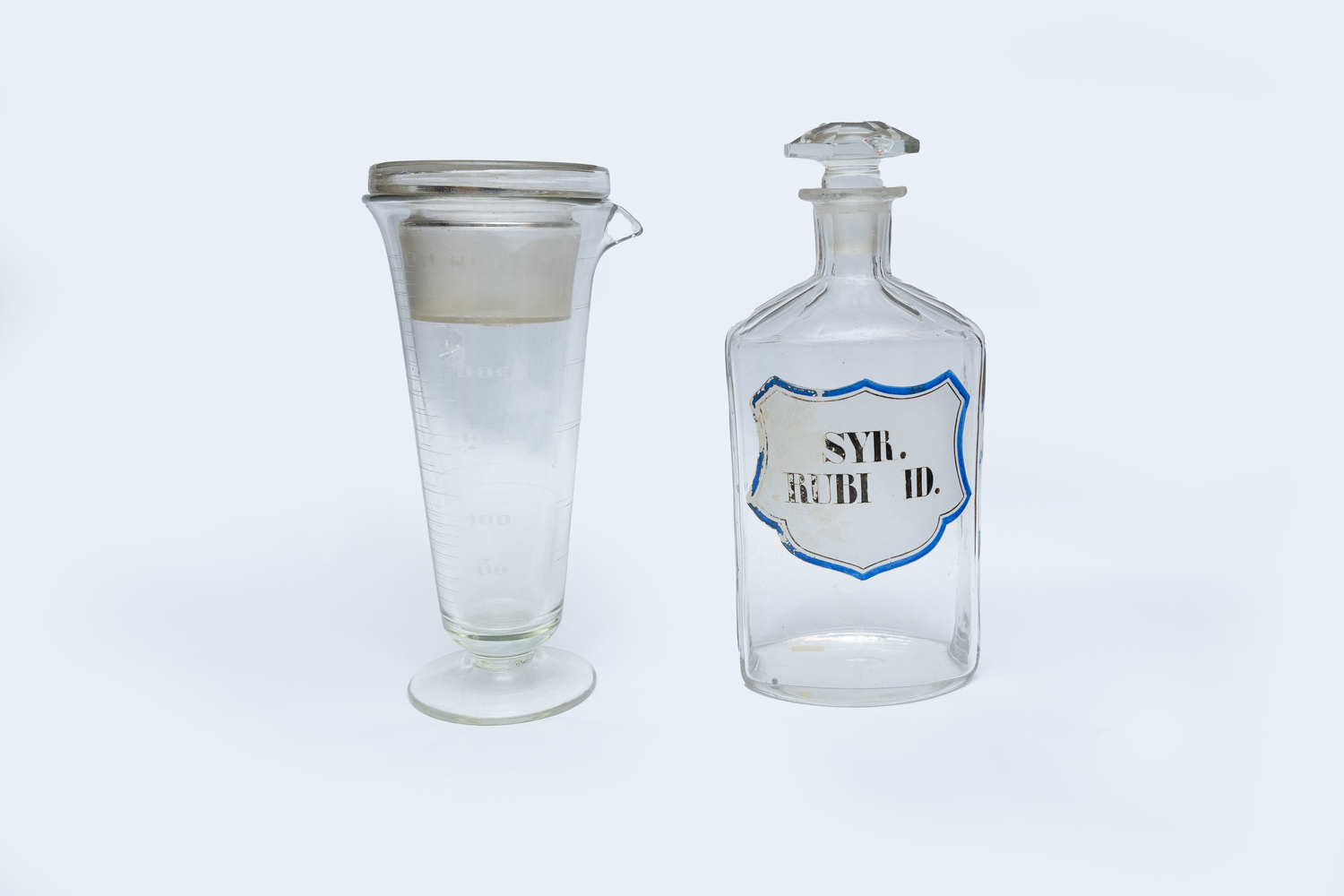
Two transparent glass containers with stoppers.
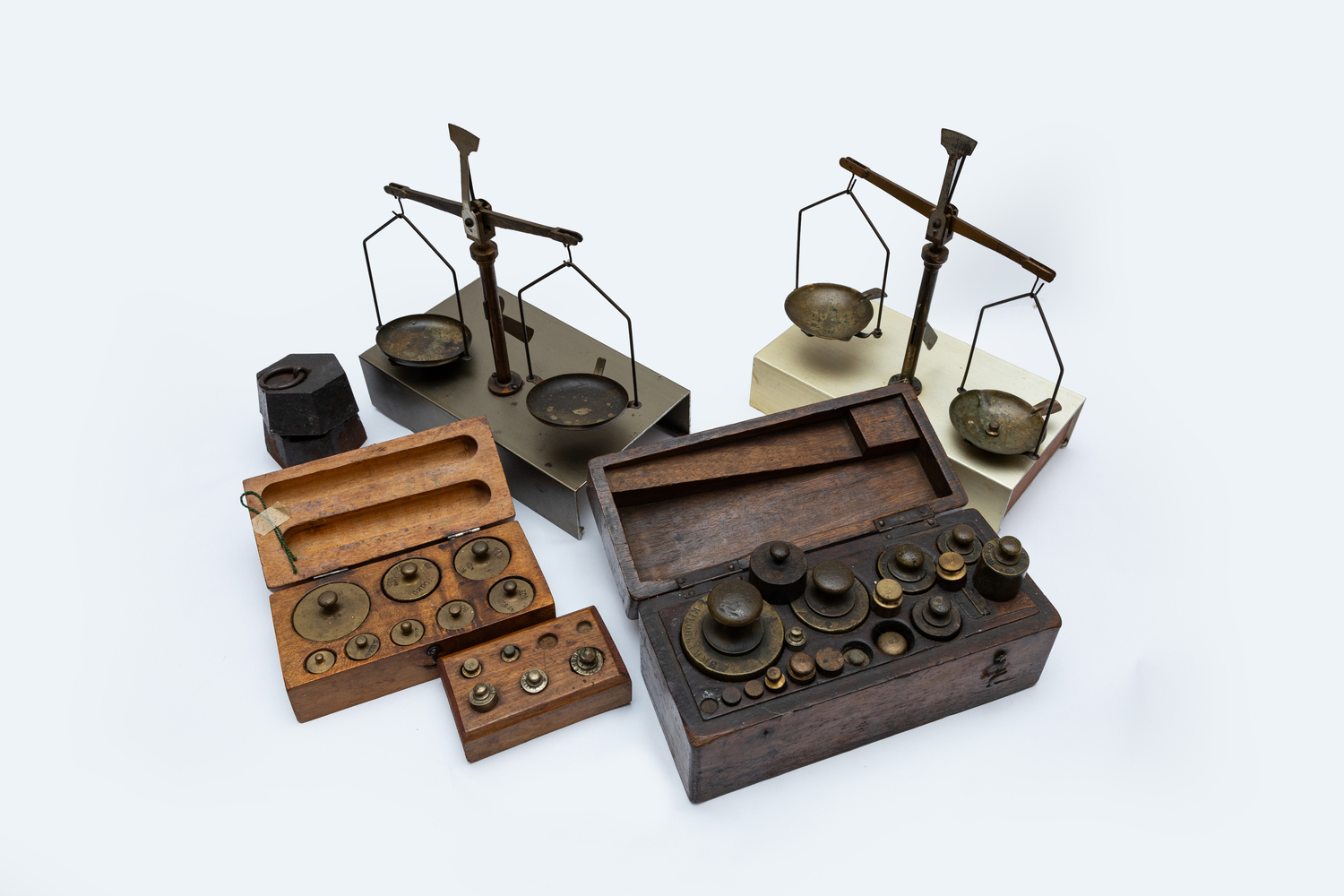
Two old metal precision scales, each with two pans and two wooden boxes containing sets of weights of various sizes, shared between the scales.
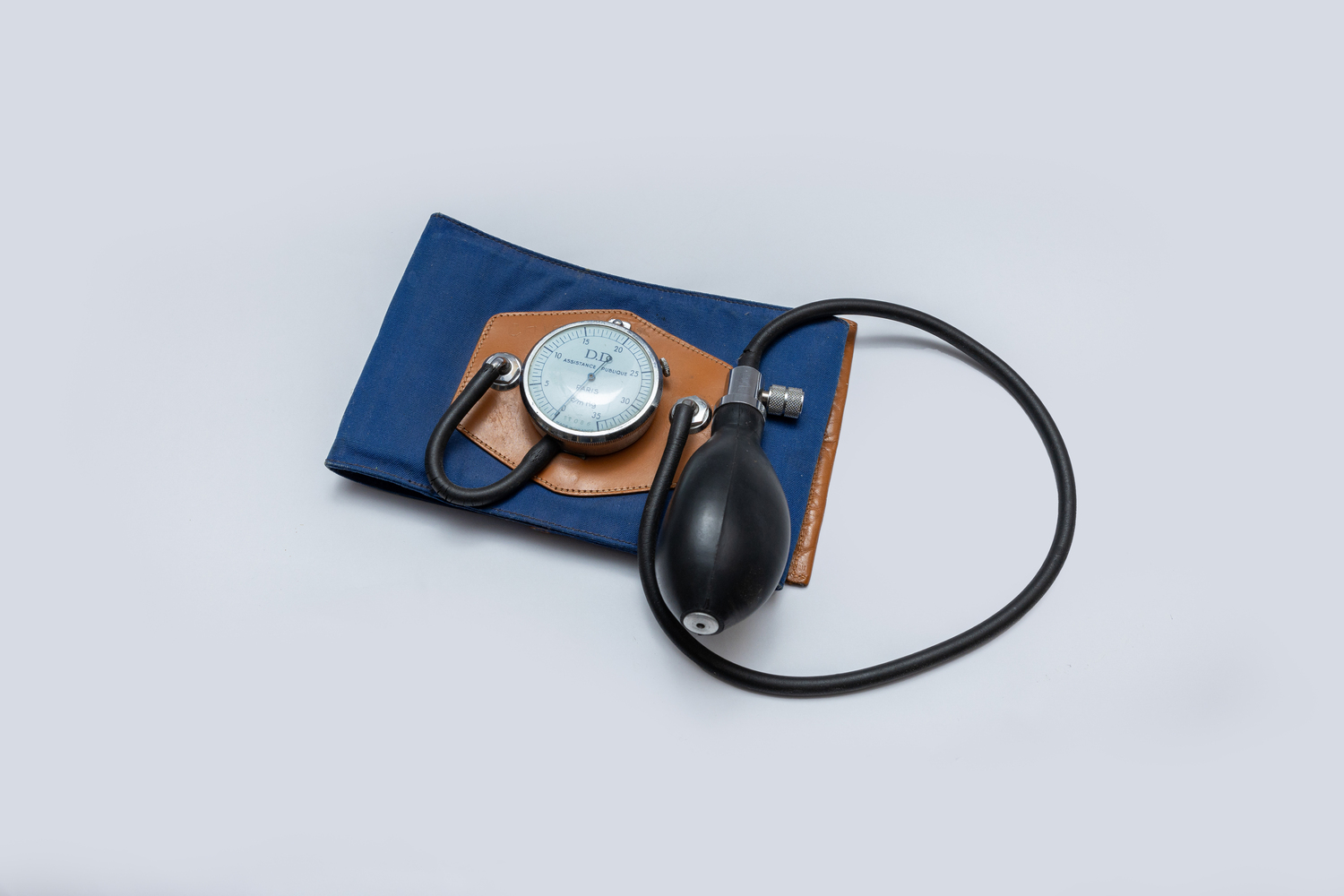
An old sphygmomanometer with a blue fabric pressure cuff featuring brown leather details, ending in a black tube and a manometer.
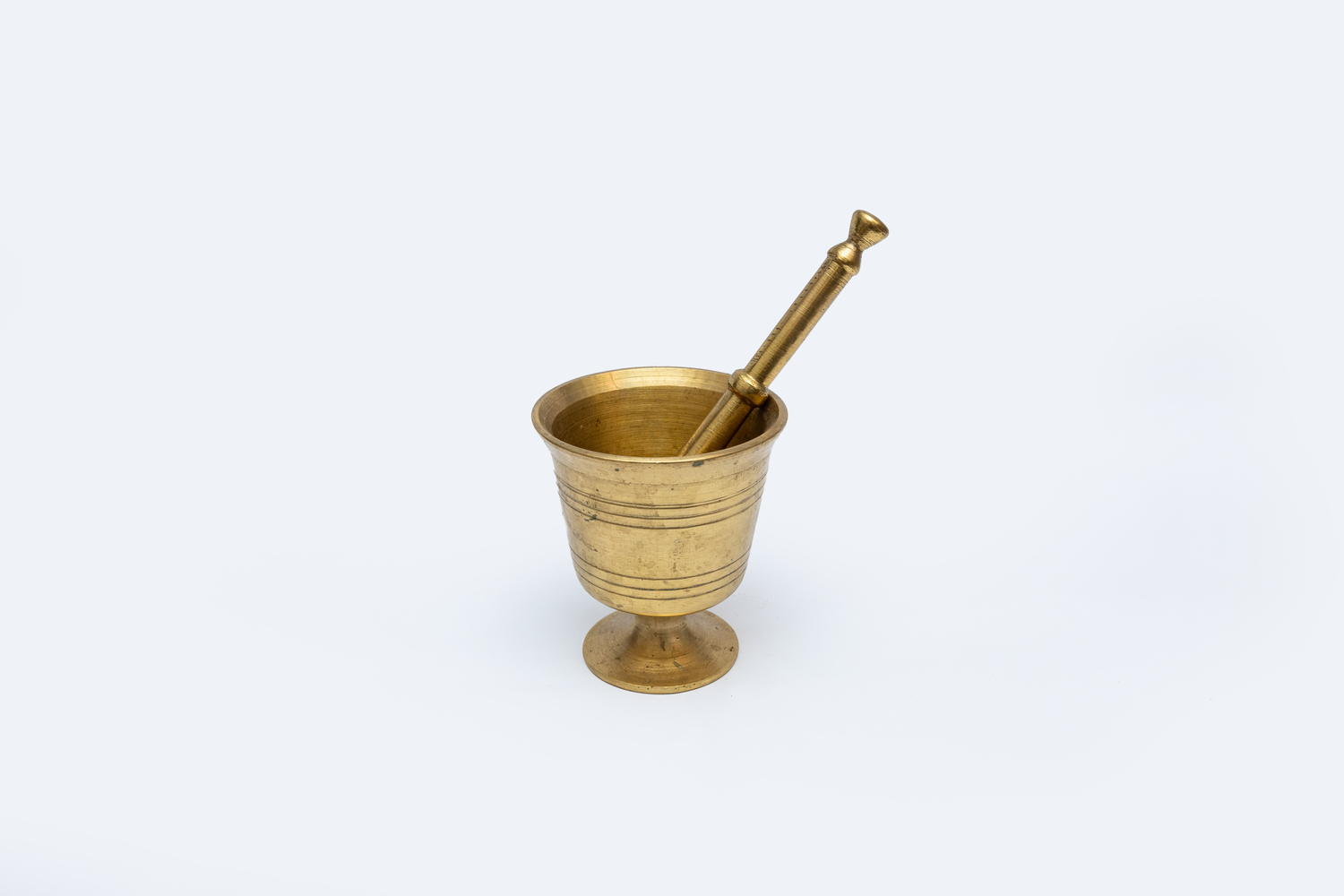
Brass mortar.
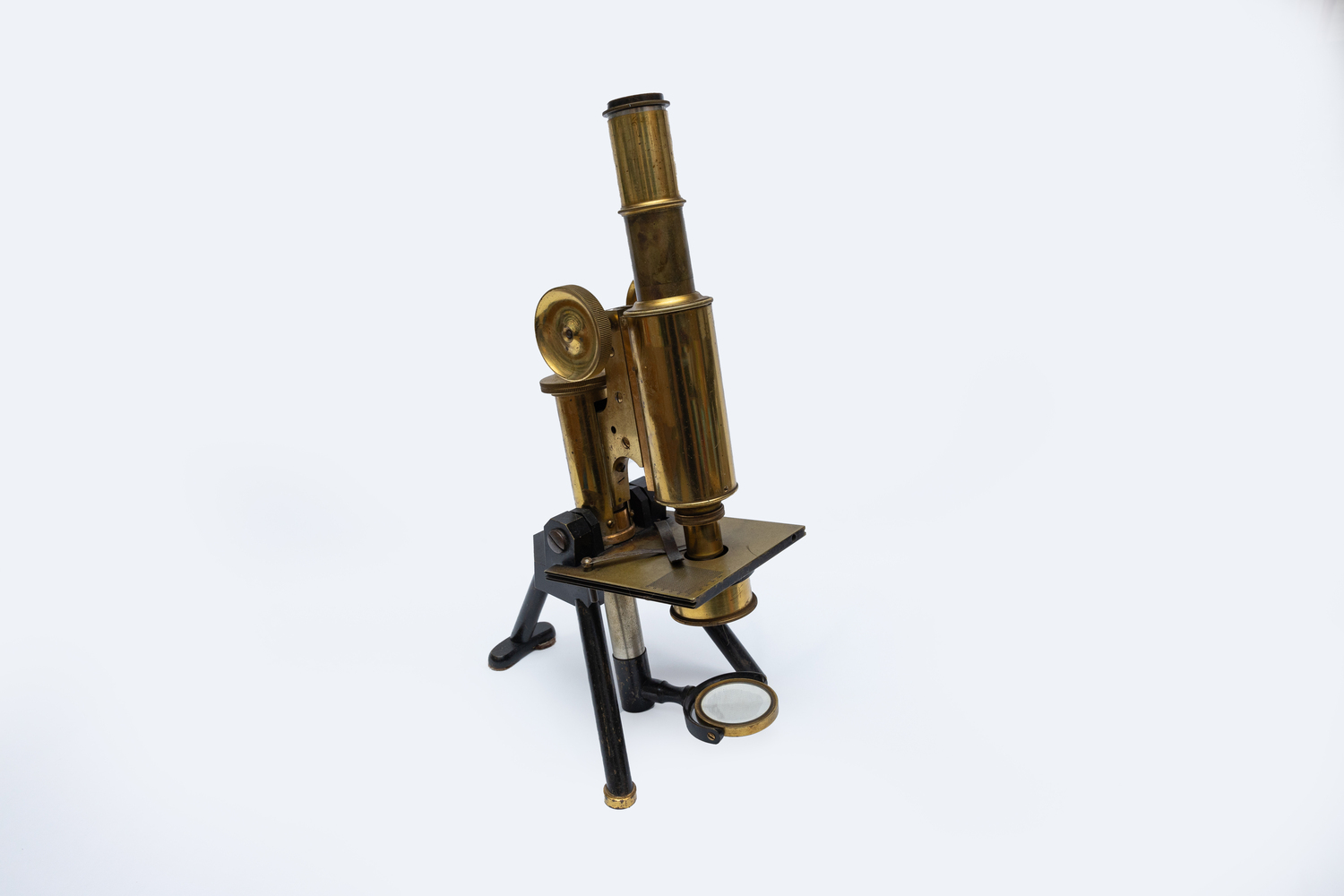
An old microscope made of wood and copper, with a black metal base and tripod support. It features a magnifying lens at the base and a focusing mechanism with manual adjustment.
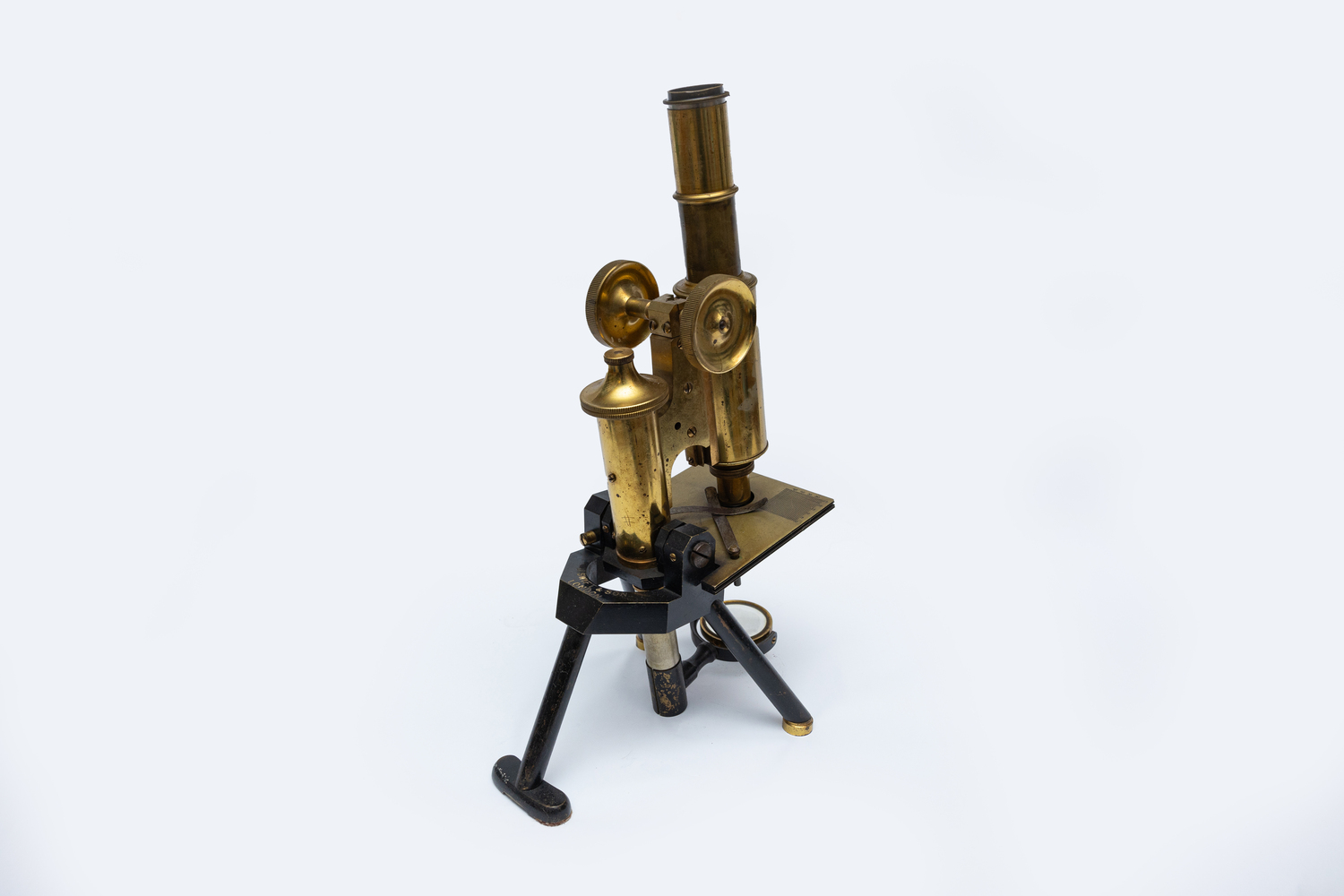
An old microscope made of wood and copper, with a black metal base and tripod support.